

Should you have a marketing video on your heating engineer website?
Most heating engineer websites don't have a marketing video. Here's the case for adding one, what should and shouldn't go in it and when it isn't worth the effort.
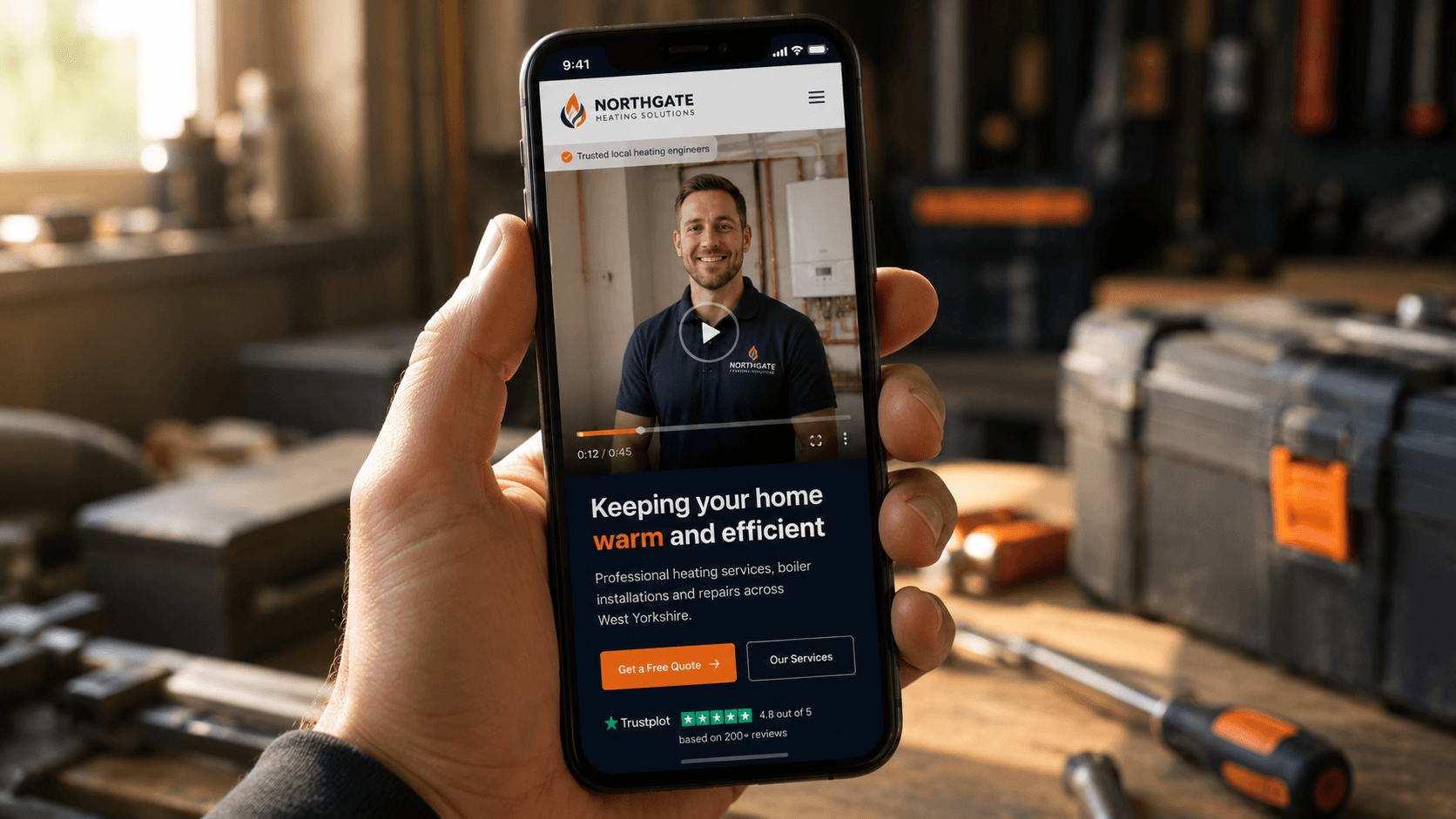
The answer in one line: yes, if it's short, well-made and shows the engineer or the work. A 25 to 60-second video on the home page lifts trust and time on page and reads as more credible than text alone. The maths only fails when the video is bad or expensive.
Most heating engineer websites don't have one. A quick look through the top ten "heating engineer [town]" results in most UK towns shows the same pattern: phone number on the right, list of services, a few photos of vans, no video.
That's a gap. Not because video is magic, but because the bar is low. The first engineer in your town with a clean 30-second video on the home page looks more confident than the four engineers sitting alongside without one. Same Gas Safe number, same coverage area, possibly the same prices, different first impression.
Why does almost no heating engineer have a marketing video?
Three reasons.
Cost. Local videographers quote £400 to £1,500 for a short business video. For an engineer turning over five or ten thousand a month, that's a real chunk of cash spent on something whose payoff isn't obvious until later.
Time. Filming on site means coordinating with a homeowner who'd rather you just fixed their boiler. Editing yourself is a rabbit hole. Most engineers start, get part of the way through, then leave it.
The "I don't want to be on camera" thing. The trade is full of people who'd rather grout a bathroom than film themselves saying their own business name. Fair enough. A good marketing video doesn't need the engineer on camera, but most engineers don't know that's an option.
What does a marketing video actually do?
Four things, in roughly this order of impact.
It sets the tone in three seconds. A static page lists what you do. A video shows it. The "show, don't tell" line exists because it's true. Within three seconds a visitor can tell whether the site feels current or dated, professional or hobbyist. Video pushes that signal harder than any other element on the page.
It lifts time on page. A 30-second video that plays in the hero raises the average session length on the home page, which Google reads as a quality signal. Engineers we've worked with see 15 to 40 percent more time per visit after a video goes live. That feeds into local SEO rankings over the months that follow.
It builds trust before they ring you. Homeowners booking a heating engineer are a bit nervous. They're letting a stranger into the house, often when they're already stressed about a broken boiler. A video that shows the engineer, the work, or even just the van, reduces that anxiety in a way a photo doesn't.
It differentiates you from the four other engineers in the area. This is the one most engineers underestimate. The homeowner is comparing three or four sites side by side. The one with a video has a measurable edge at the moment of choice.
What should be in the video?
Three options, in order of effort.
The engineer on camera. A 25 to 45-second piece-to-camera. Engineer in branded workwear, in the van or on the doorstep of a recent job. Says their name, what they do, their patch, why they got into the trade. This is the highest-trust version when done well. It's also the hardest to film and the most off-putting to engineers who hate being on camera.
Work footage with voiceover. B-roll of the van, the engineer's hands working on a boiler, a wide shot of a finished install, a customer handshake at the door. A short voiceover names the business, the services and the coverage area. No face-to-camera required. Good middle ground.
A branded animated video. Brand colours, your logo, motion graphics walking through services, area and accreditations. No filming required at all. The Syntorak £295 site includes one of these built from your business details, services and area. Not because it's the most authentic option, but because it's the option engineers actually get done.
Here's a 23-second example of what a branded animated video for a UK heating engineer can look like. Same template, swapped business details, services and area for each engineer:
What the video should NOT contain: a 90-second voiceover about your love of plumbing, stock footage of someone else's pipework, generic library music that sounds like a corporate training video, customer testimonials read by an actor. The trade audience can spot fake from a mile off.
How long should it be?
Under 60 seconds. Aim for 25 to 45.
Most homeowners scrolling a heating engineer's home page on their phone give it 5 to 10 seconds before deciding whether to keep watching. A 30-second video has a chance of being watched through. A 90-second video gets abandoned by 80 percent of viewers halfway. The data is consistent across industries.
If you've got more than 45 seconds of valuable content, cut it. The bits that don't make the cut can become individual customer-FAQ videos on a separate page, which is a different content shape entirely.
Mobile portrait or landscape?
Both, ideally.
Most heating engineer website traffic is mobile. Phones are held vertically. A 16:9 landscape video on a phone takes up about a third of the screen and reads small.
A vertical (9:16) or square (1:1) video fills the screen on a phone. Same content, much more visual impact. The trade-off: it looks slightly off on a desktop browser if you only ship the portrait version.
The fix is to ship both. A portrait video for mobile, a landscape for desktop, served via the same element with CSS picking the right one for the viewport. The Syntorak £295 site does this by default. If you're getting a video made elsewhere, ask for both aspect ratios as part of the deal.
What does a marketing video cost in 2026?
Roughly three brackets.
Local videographer, full shoot. £400 to £1,500. Half a day of filming, basic edit, music licence. Quality varies wildly. Some are brilliant. Some give you the same template they gave the kebab shop down the road.
AI-built branded video, made from your business details. Effectively free as part of a Syntorak £295 site. Built from your services, area, accreditations and brand colours. Optimised for mobile portrait and desktop landscape. Lives on the home page as the hero video. See an example on the Syntorak home page.
DIY with your phone and free editing tools. Free, but the time cost is high and the polish ceiling is low. Works if you've already got an eye for video. Most engineers don't. The result hurts more than it helps.
When is a marketing video not worth it?
Two scenarios.
If your website has fundamental issues (no SSL, broken contact form, missing service pages), the video isn't the priority. Fix the basics first. A polished video on top of a broken website is throwing good money after bad. The 10 pages every heating engineer website needs is the spec to fix first.
If you can't get a good video made for under about £400 and you don't have time to produce one yourself, the maths gets thin. A bad video is worse than no video. If the choice is between a generic, off-brand £200 video and waiting six months for a properly made one, wait.
How do you measure if it worked?
Three signals worth tracking.
Time on page. Compare home-page session duration before and after the video goes live. Looking for at least a 20 percent lift over a 30-day window. Use Google Analytics or whatever your hosting includes.
Enquiry rate. Trickier to measure cleanly because so many other variables shift, but if enquiries per visit rise after the video lands, it's almost certainly part of the cause.
What new customers say. When new customers say "I felt good about you from the website", they're usually referring to the video, even if they don't say so directly. Track that informally.
The short version
A good marketing video on a heating engineer's home page is worth it. Most engineers don't have one, which is exactly why it works as a differentiator. The trick is keeping it short, making it well and not paying agency money for a generic result.
The Syntorak £295 offer bakes a branded animated video into every site, built from your business details and optimised for mobile and desktop. See what it looks like on the Syntorak home page, then look at three live examples. The first three months of having one on the site is when you'll see the time-on-page lift; the trust signal compounds over the year that follows.
If you'd rather just have it done, the £295 offer covers it. One price, live in days, no deposit, see it before you pay.
FAQ
Common questions about this
Do I need to be on camera for this to work?
Will Google show my video in search results?
What if I don't have any photos or footage to start from?
How long does a marketing video take to make?
Can I change or replace the video later?
Related
More for heating engineers
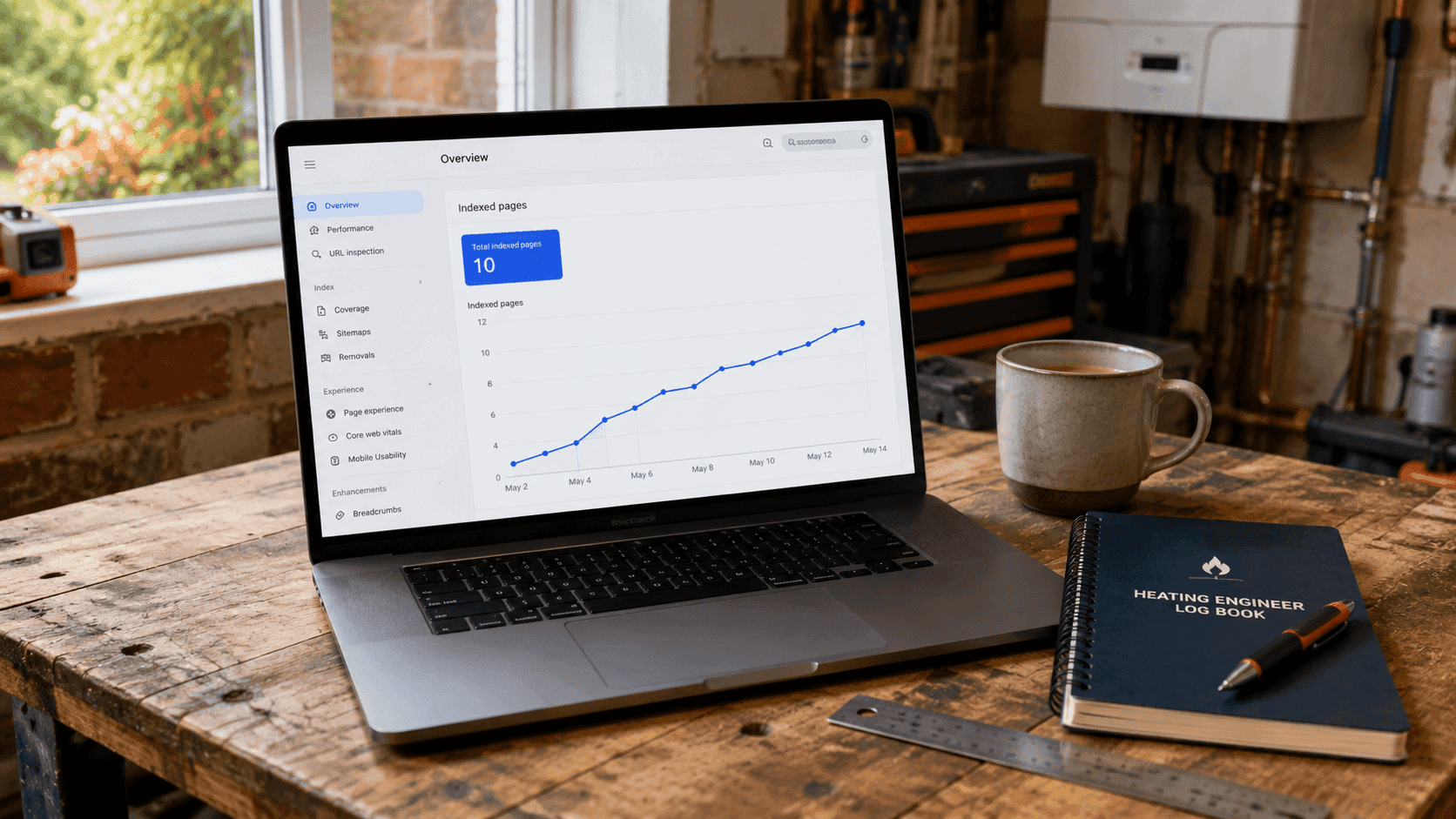
How long does Google take to index a new heating engineer website?
Bought a website weeks ago and still nothing on Google? That's normal in week 1, less normal by week 4. Here's what indexing actually means, how long it really takes and the four things that speed it up.

10 pages every heating engineer website needs (and why most have only 3)
Most heating engineer websites are 3 pages: Home, About and Contact. They're missing the 7 pages that actually drive enquiries. Here's the full spec and why each one earns its place.
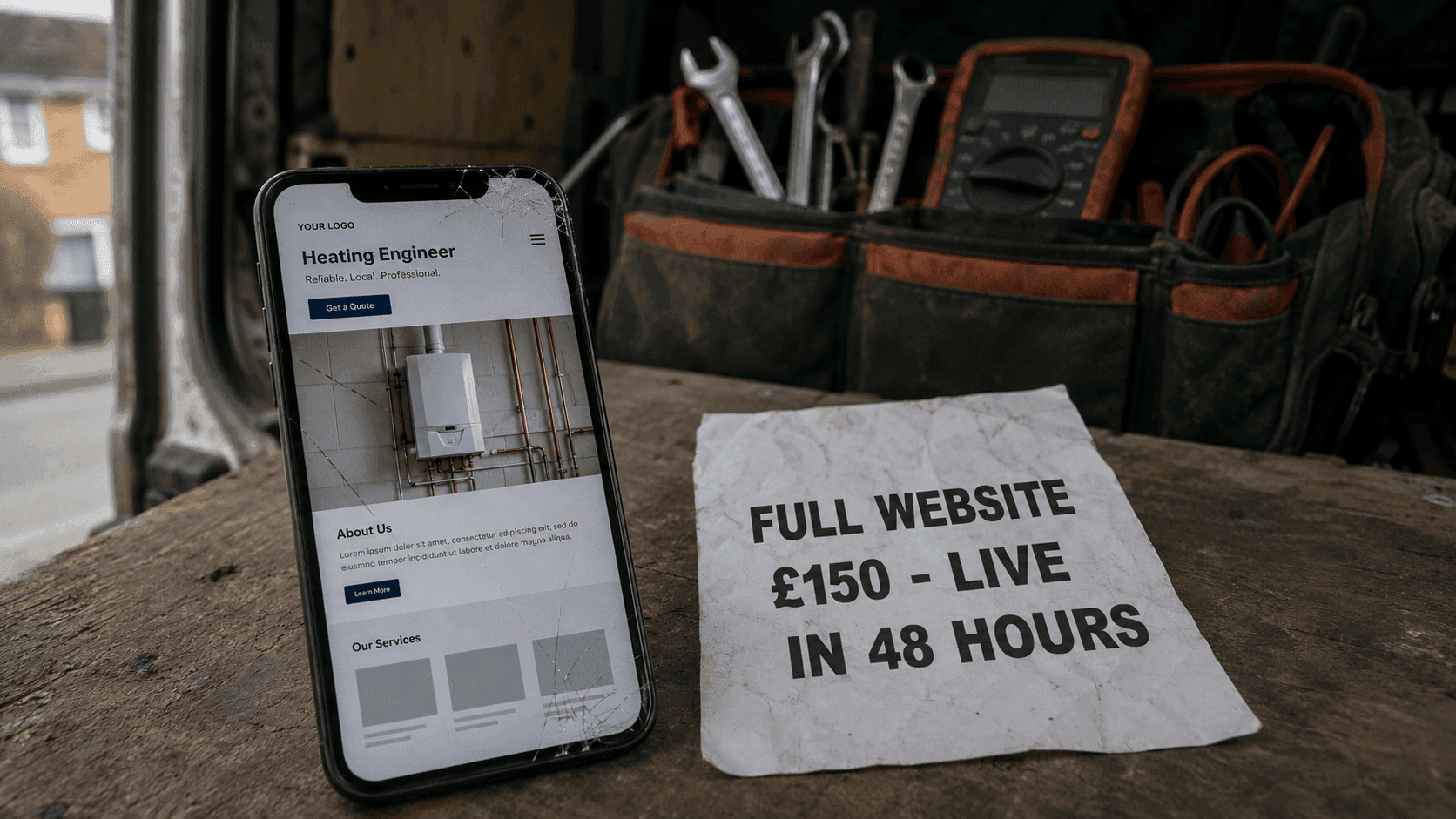
The £150 cheap-builder website trap for tradespeople
There's a tier of websites pitched at tradespeople at £150 to £250 a build. Most are generic WordPress installs with no SEO, no proper hosting and a builder who disappears within 3 months. Here's how to spot the trap before you pay and what to do if you've already paid.